Aviator: How to Play
Aviator by Spribe is a crash game, not a video slot. Its gameplay revolves around a rising multiplier and the player's decision on when to cash out. This format is distinct from traditional slots, as there are no reels, paylines, or bonus rounds like free spins.
This guide explains the core mechanics of Aviator, including how rounds work, how to place bets, and the importance of cash-out timing. It also covers practical aspects like bankroll management and the game's provably fair system.
Core Gameplay Rules
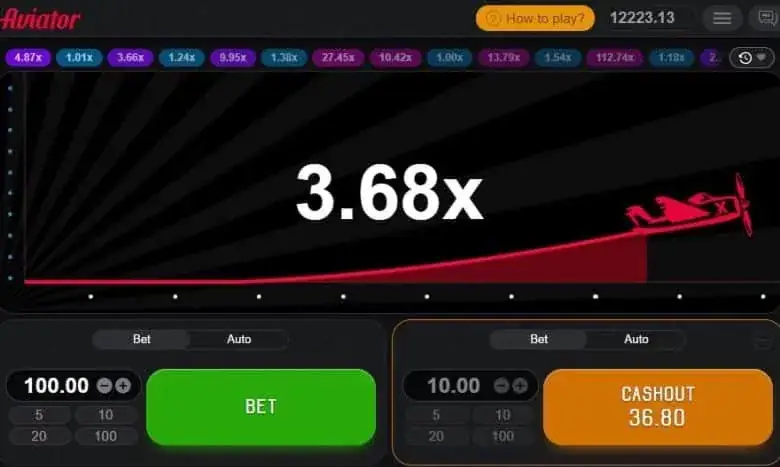
Aviator is a crash game. Each round begins with players placing a bet. A multiplier then starts to increase from 1.00x, represented visually by a plane taking off on a curve. The multiplier continues to rise until it randomly crashes, ending the round.
The objective is to cash out your bet before this crash occurs. If you cash out successfully, you win your bet multiplied by the value shown at the moment of cash-out. If the multiplier crashes before you cash out, you lose your bet for that round. The game features an auto cash-out function, allowing you to set a target multiplier at which your bet is cashed out automatically.
Step-by-Step First Session
- Load the game. You will see a betting interface and a central display showing a runway.
- Set your bet amount. The minimum bet is $0.10 and the maximum bet is $100, as configured by the provider.
- Optionally, set an auto cash-out multiplier. This determines the point at which your bet is automatically collected.
- Place your bet. The round begins, and the multiplier starts increasing from 1.00x.
- Monitor the rising multiplier. You can manually cash out at any time by clicking the cash-out button.
- If you cash out before the crash, your winnings are credited. If the plane flies away (crashes) before you cash out, the bet is lost.
- The game history displays previous multiplier results, which can inform but do not predict future rounds.
Game Values, Limits and Strategy
Aviator does not use symbols or a paytable. The payout is determined solely by the multiplier at the point of cash-out. The following table outlines the key numerical values for the game as set by the developer Spribe.
| Metric | Value |
|---|---|
| Game Type | Crash |
| RTP (Return to Player) | 97.00% |
| Maximum Win | 10000x bet |
| Minimum Bet | $0.10 |
| Maximum Bet | $100 |
| Volatility | Low |
The house edge is 3%.
With a low volatility rating, Aviator is designed to produce frequent, smaller wins rather than rare large jackpots. Effective bankroll management is essential for sustained play. Your bet size should be a small fraction of your total bankroll. A common approach is to bet no more than 1-2% of your bankroll on any single round. The wide betting range of $0.10 to $100 accommodates various budgets. Setting a strict loss limit for your session and adhering to it is a fundamental practice. The auto cash-out tool is valuable for enforcing a profit target and removing emotional decision-making from the cash-out timing. Remember, the 97% RTP is a theoretical long-term average. It does not guarantee individual session results, and the house always retains a 3% edge.
Key Features Explained
Rising Multiplier and Crash: This is the central mechanic. A random number generator determines the crash point for each round. The multiplier rises until it reaches this point.
Manual and Auto Cash-Out: You retain full control over when to collect winnings. The auto cash-out feature allows for a disciplined strategy by automatically securing a win at a predetermined multiplier.
Provably Fair System: Aviator uses a cryptographic system to ensure round fairness. The outcome of each round is generated from a combination of seeds from the game server and the first players to bet. This allows the result to be verified after the round ends.
Double Bet: Players have the option to place two separate bets with different parameters in a single round. This allows for different risk strategies simultaneously.
Technical Framework and Provable Fairness
The underlying technical architecture of Aviator is a critical component that distinguishes it from traditional online casino games. As a crash game developed by Spribe, it operates on a provably fair system. This system allows players to independently verify the fairness of each round's outcome. The crash point, which is the random multiplier value at which the plane flies away and all active bets are lost, is determined by a cryptographic process before the round even begins. This seed is then hashed and made public, ensuring the result cannot be altered after bets are placed.
This provable fairness model addresses a common concern in online gambling regarding the transparency of random number generation. Players can, in theory, check the integrity of each game round using the provided client seed, server seed, and nonce. This technical safeguard is designed to build trust, confirming that the game's stated 97% RTP and the house edge of 3% are mathematically enforced and not subject to manipulation. It shifts the risk from potential operator interference to the player's own timing decisions on when to cash out.
The game's performance and presentation are also shaped by its technical design. The visual theme is minimalistic, featuring a simple black background and a central animation of a plane taking off along a curve representing the rising multiplier. Notably, these animations can be toggled off in the game settings. This option can improve performance on older devices, conserve battery life on mobile phones, and reduce data usage, which is a practical consideration for players in areas with variable internet connectivity.
Unlike slot machines, Aviator's codebase does not include the logic for special features like free spins, bonus rounds, or cascading reels. Its technical footprint is dedicated solely to the crash mechanic, the betting interface, and the social chat function. This focused design contributes to the game's reliability and fast loading times. The absence of complex bonus feature code also means the game's volatility is not determined by a traditional slot math model but by the distribution of the random crash points and, more directly, by the cash-out strategies employed by the player.
Aviator Glossary
- Cash-Out: The action of collecting your winnings during a round, multiplying your bet by the current multiplier.
- Crash Point: The randomly determined multiplier value at which the round ends and all uncashed bets are lost.
- Multiplier: The continuously increasing number that determines your potential win amount. It starts at 1.00x.
- Auto Cash-Out: A feature that automatically cashes out your bet when the multiplier reaches a value you set.
- Provably Fair: A system using cryptography to allow players to verify the randomness and fairness of each game round.
- RTP (Return to Player): The theoretical percentage of all wagered money a game will pay back to players over time. Aviator's default is 97%.
Aviator: questions and answers
Is Aviator a slot machine?
No, Aviator is not a slot machine. It is a crash game. It does not have reels, paylines, scatter symbols, wilds, or free spins. The gameplay is based on a rising multiplier and timing your cash-out.
How do I win at Aviator?
You win by cashing out your bet before the multiplier randomly crashes. Your winnings are calculated as your bet amount multiplied by the multiplier value at the moment you cash out. Using the auto cash-out feature can help secure wins at a chosen level.
What is the RTP of Aviator?
The default RTP (Return to Player) for Aviator, as set by developer Spribe, is 97.00%. This means the theoretical house edge is 3%.
What is the maximum I can win?
The maximum win in Aviator is 10,000 times your bet. This is the highest possible multiplier payout as defined by the game provider.
What does 'provably fair' mean?
Provably fair is a system that uses cryptographic techniques to allow players to verify the fairness of each game round. In Aviator, the crash outcome is generated from seeds, and you can check this data to confirm the round was not manipulated.
Can I play Aviator for free?
Yes, a demo version of Aviator is available at many game review sites. This allows you to learn the mechanics without risking real money. Real-money play is for adults 18+ and is offered by sites licensed by provincial gambling boards in South Africa.